Context:
This project focused on improving subscription retention during the renewal cancellation flow. Users were frequently ignoring available offers and proceeding directly to cancellation, resulting in preventable churn.
The scope included desktop and mobile renewal experiences, specifically targeting users who initiated cancellation despite having access to discounts, plan downgrades, or added-value bundles.
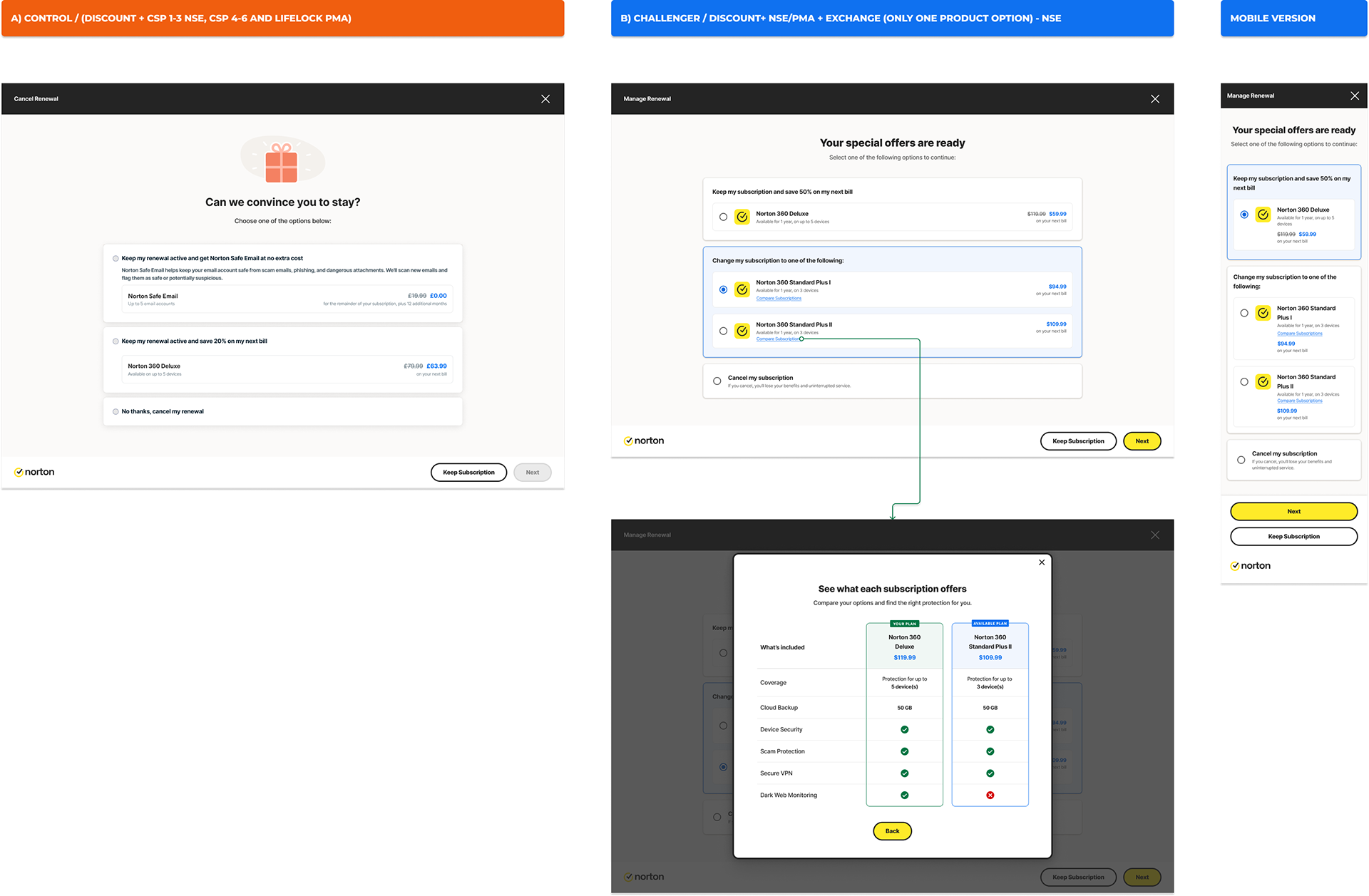
Comparison of control and redesigned cancellation flows
Problem Statement:
Despite presenting discounts and alternative plans, a significant percentage of users continued to cancel their subscriptions. Key issues identified:
- Offers were easy to ignore and visually secondary to cancellation
- Value differences between plans were unclear
- Users experienced choice overload without guidance
- The cancellation path felt equally weighted as retention paths
- Mobile users faced compressed information density, reducing comprehension
- Value differences between plans were unclear
- Users experienced choice overload without guidance
- The cancellation path felt equally weighted as retention paths
- Mobile users faced compressed information density, reducing comprehension
My Role:
- UX audit of existing cancellation flow
- Redesign of retention and offer presentation
- Information hierarchy and interaction design
- Desktop and mobile optimization
- Collaboration with product and experimentation teams
- Redesign of retention and offer presentation
- Information hierarchy and interaction design
- Desktop and mobile optimization
- Collaboration with product and experimentation teams
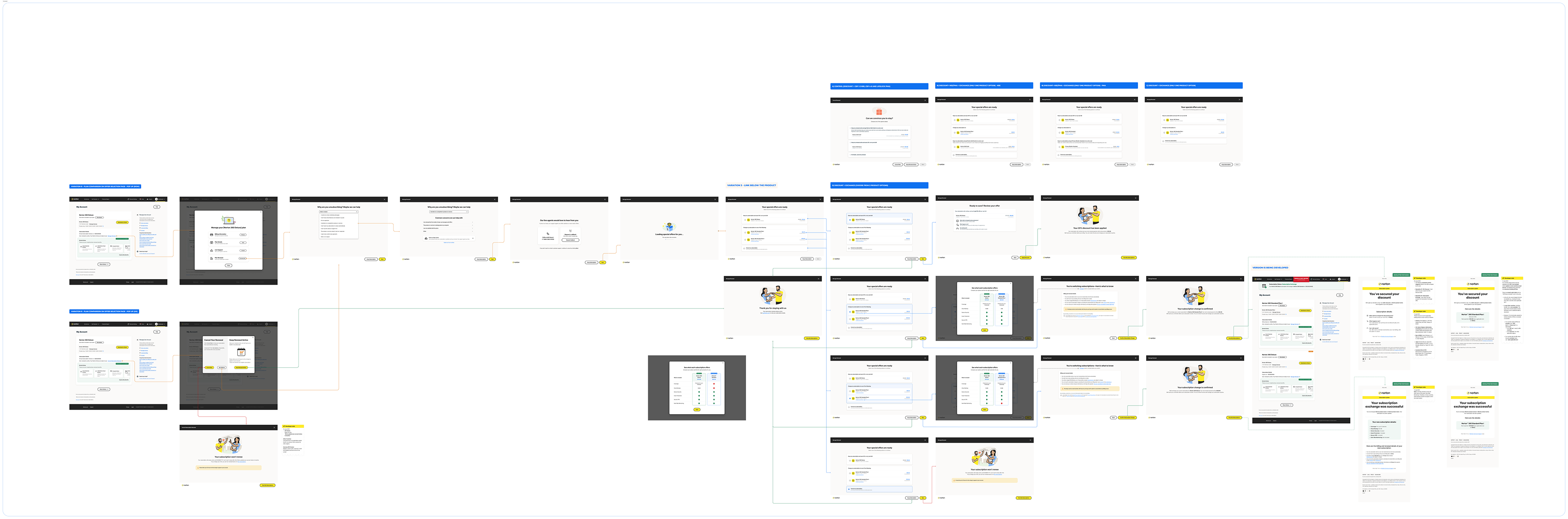
Design Interventions (What I Added & Why):
1. Stronger Value Framing for Retention
What I added
- Explicit savings messaging (e.g., “Save 50% on your next bill”)
- Price comparison with strikethrough original price
Why?
Behavioral research shows users respond better to loss avoidance than abstract discounts. Anchoring against the original price made the offer feel tangible and time-sensitive.
1. Stronger Value Framing for Retention
What I added
- Explicit savings messaging (e.g., “Save 50% on your next bill”)
- Price comparison with strikethrough original price
Why?
Behavioral research shows users respond better to loss avoidance than abstract discounts. Anchoring against the original price made the offer feel tangible and time-sensitive.
2. Guided Plan Comparison Modal
What I added
Side-by-side comparison modal highlighting:
- Coverage
- Cloud backup
- VPN
- Dark Web Monitoring
- Visual indicators (checkmarks vs. absence)
What I added
Side-by-side comparison modal highlighting:
- Coverage
- Cloud backup
- VPN
- Dark Web Monitoring
- Visual indicators (checkmarks vs. absence)
Why
Users previously lacked clarity on what they would lose by downgrading or canceling. This modal reduced uncertainty and increased confidence in switching rather than canceling.
Users previously lacked clarity on what they would lose by downgrading or canceling. This modal reduced uncertainty and increased confidence in switching rather than canceling.
3. Progressive Disclosure of Choices
What I added
What I added
- Default focus on best-value option
- Secondary plans shown only when users opt to “Change my subscription”
- Reduced visible cognitive load on first decision screen
- Secondary plans shown only when users opt to “Change my subscription”
- Reduced visible cognitive load on first decision screen
Why?
Presenting all options upfront caused paralysis. Progressive disclosure allowed users to engage step-by-step, improving comprehension and retention.
Presenting all options upfront caused paralysis. Progressive disclosure allowed users to engage step-by-step, improving comprehension and retention.
4. Mobile-First Optimization
What I added
What I added
- Single-column layout
- Larger tap targets
- Sticky primary CTA
- Reduced text density
- Larger tap targets
- Sticky primary CTA
- Reduced text density
Why?
Mobile users historically show higher cancellation rates due to rushed decisions. Improving scannability directly addressed this segment’s churn.
Mobile users historically show higher cancellation rates due to rushed decisions. Improving scannability directly addressed this segment’s churn.
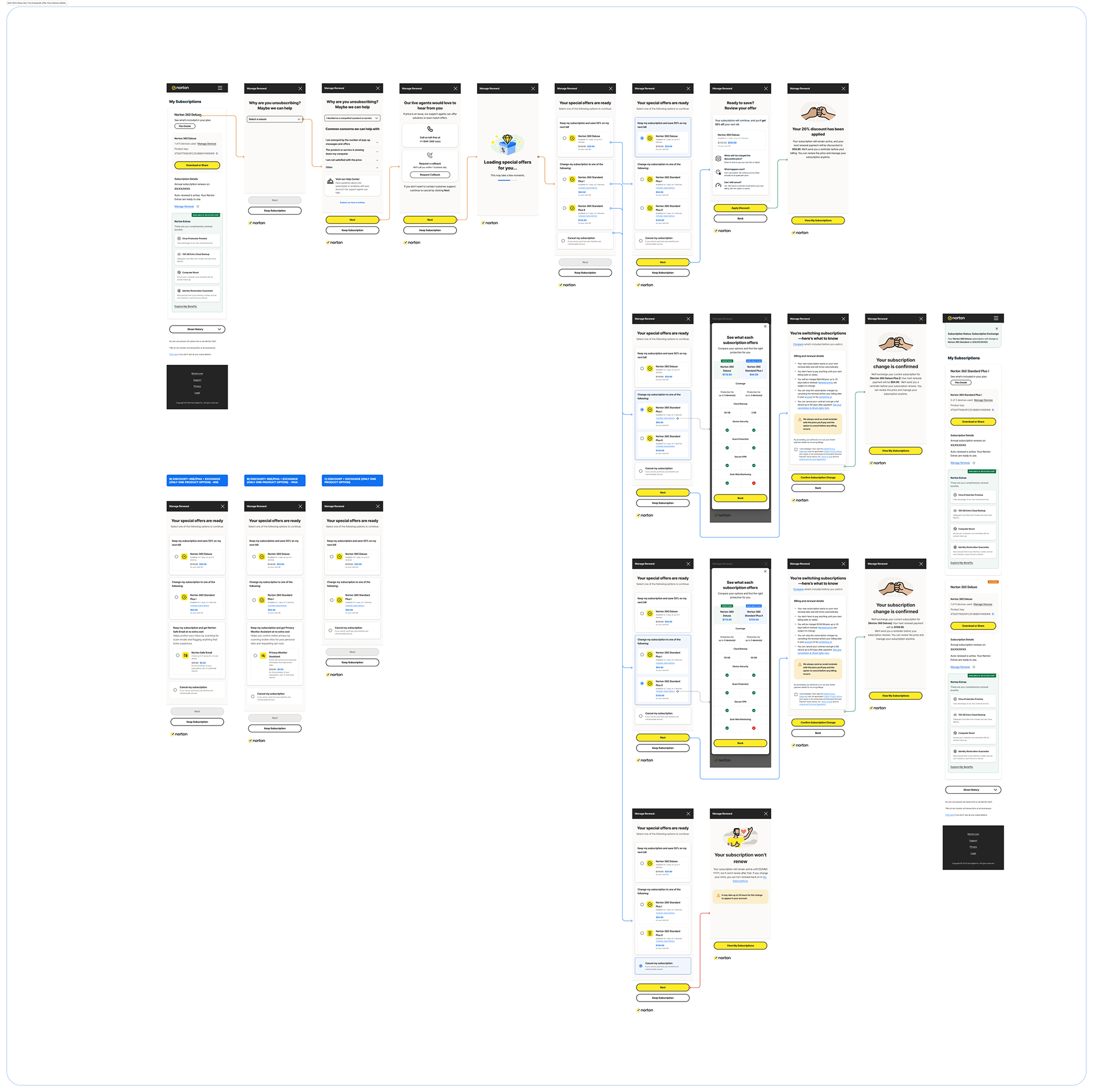
Business Impact
- Fewer users canceled after starting the cancellation process.
- More users chose a lower plan instead of leaving completely
- Users better understood the value of their subscription
- The design can be reused and tested with future offers
- Fewer users canceled after starting the cancellation process.
- More users chose a lower plan instead of leaving completely
- Users better understood the value of their subscription
- The design can be reused and tested with future offers
Key Learnings
- Clear information matters more than large discounts
- Users are more likely to stay when they understand what they would lose
- Thoughtful design works better than forcing users to stay
- Comparing plans helps users choose instead of leaving
A/B Test Results:
In a one-month A/B test, the redesigned cancellation flow outperformed the existing experience across key retention metrics.
- Users are more likely to stay when they understand what they would lose
- Thoughtful design works better than forcing users to stay
- Comparing plans helps users choose instead of leaving
A/B Test Results:
In a one-month A/B test, the redesigned cancellation flow outperformed the existing experience across key retention metrics.